Ask where the French or Japanese are from and the answer is a map. Ask where Armenians are from and you get a map plus a 3,000-year story, because the place they come from and the places they live stopped matching a century ago.
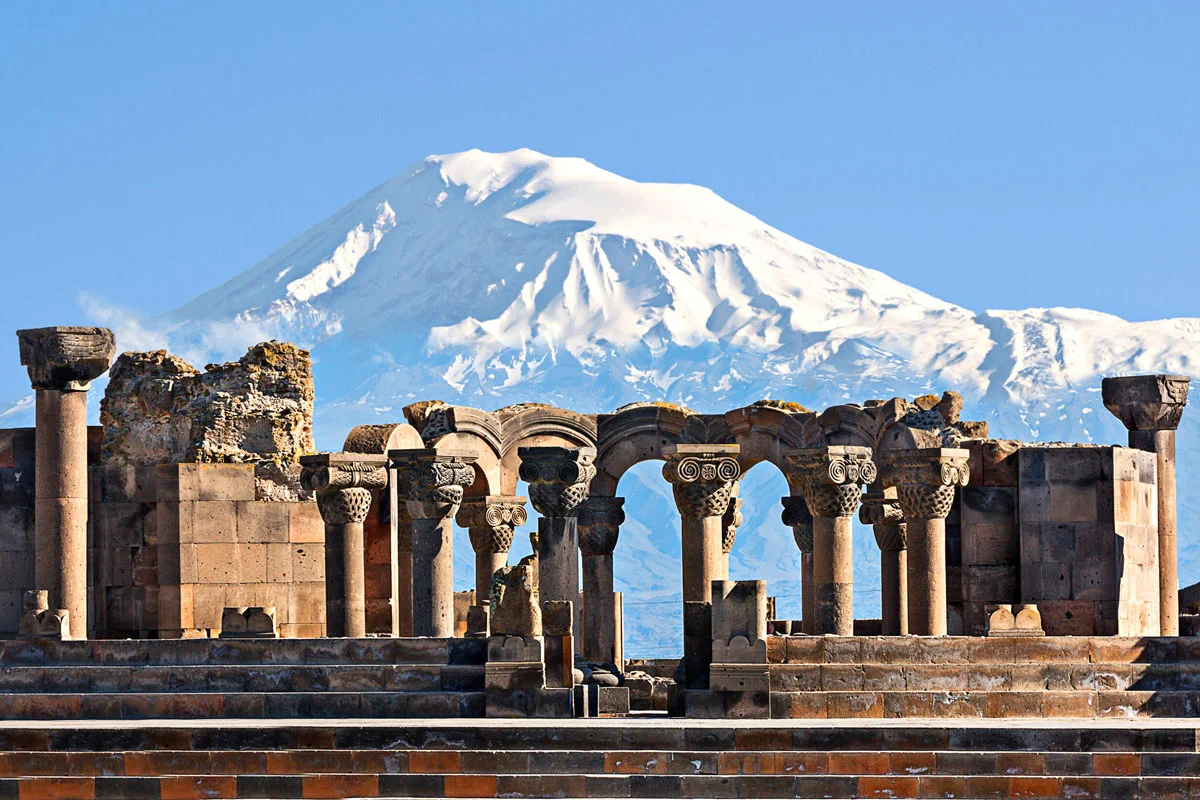
The short answer: Armenians are indigenous to the Armenian Highlands, the high volcanic plateau centered on Mount Ararat, where the borders of modern Armenia, Turkey and Iran now meet. They didn’t migrate there in recorded history. Recorded history found them already there.
How old are the Armenians as a people?
Old enough that their origins blur into legend and archaeology at the same time. On the archaeological side, the kingdom of Urartu dominated the highlands from the 9th to 6th centuries BC, building fortresses including Erebuni, founded in 782 BC on the site of present-day Yerevan. As Urartu declined, an Armenian-speaking population absorbed it, and by around 520 BC the Persian king Darius I was carving “Armina” into the Behistun inscription as one of his provinces. Greek sources picked up “Armenia” about the same time. That’s roughly 2,500 years of the name in writing, on top of centuries of formation before it.
The Armenians’ own name for themselves is different: Hay, and the country is Hayastan. Tradition traces it to Hayk, the legendary archer-patriarch who, the story goes, defeated the Babylonian giant Bel and settled his people around Ararat. Legend, yes, but it preserves a real memory: a people formed in place, around that mountain, very long ago.
What does the science say?
Linguistically, Armenian is an independent branch of the Indo-European family, related to Greek, Persian and English only at the deepest ancestral level, as covered in is Armenian similar to Farsi. Genetically, studies have found Armenians to be a stable blend of ancient local highland populations, with little admixture since the Bronze Age. In plainer words: the people are as indigenous to that plateau as a population can demonstrably be.
Why is the homeland bigger than the country?
Because the modern Republic of Armenia is the surviving fraction. The Armenian Highlands stretch deep into what is now eastern Turkey, the region Armenians call Western Armenia: Van, Kars, Erzurum, Mush. Armenians lived there continuously for millennia until the 1915 genocide killed up to 1.5 million of them and expelled the rest. The eastern portion of the homeland, then under Russian rule, became the Soviet and later independent republic.
That’s why an Armenian-American’s family story usually starts in a town that sits in Turkey today. The Kardashians’ ancestors came from Karakale near Kars. Andre Agassi’s grandmother was born in Ottoman Armenian lands. The homeland didn’t move. The border did, over the bodies of its people.
So where do Armenians live now?
Everywhere, in one of the world’s most dispersed nations. Around 3 million in Armenia itself, and roughly twice that outside it: huge communities in Russia, the United States (especially Los Angeles), France, Iran, Lebanon, Syria, Georgia and Argentina. The full accounting is in how many Armenians live in the world.
The remarkable part is what dispersal didn’t dissolve. A people scattered across thirty countries kept its language and alphabet, its church, its kitchens and its surnames. Where are Armenians from? The mountains around Ararat. Where are they now? Nearly everywhere, and still, stubbornly, from those mountains.