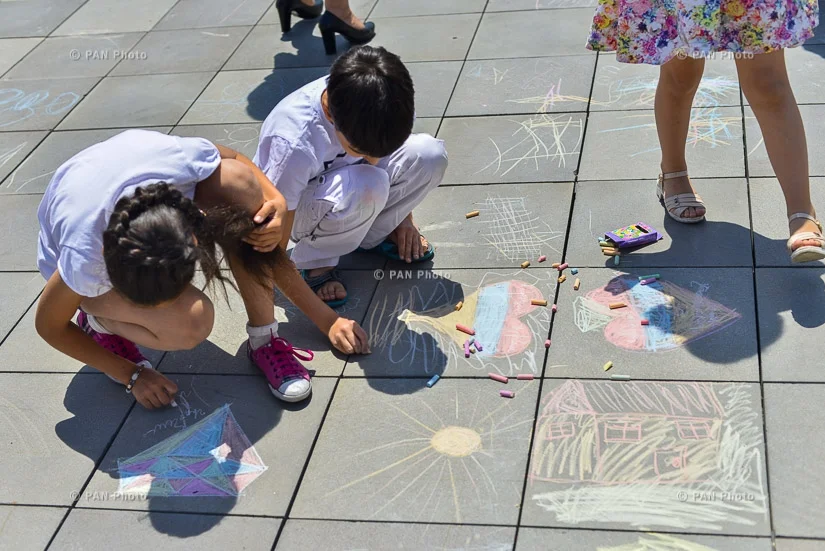
Armenia is one of those countries where the safety question has a boring answer and an interesting explanation. The boring answer: yes, it’s very safe, and in 2026 it might be the most relaxed time to visit in a generation. The explanation involves low crime, a hospitality culture with its own untranslatable word, and, finally, some good news on the geopolitics.
What are the general crime levels in Armenia?
Low, and reliably so. Violent crime against strangers is rare, organized street crime is essentially absent, and surveys like Gallup’s Global Law and Order index have repeatedly placed Armenia near the top tier of countries where people feel safe walking alone at night.
The realistic risk is the same one you’d manage in Rome or Prague: petty theft. Keep an eye on your phone in a crowded market or a packed marshrutka and you’ve covered most of it. Even pickpocketing runs thinner here than in most European tourist cities, simply because the crowds are smaller and the culture frowns hard on stealing from guests.
How safe is Yerevan for tourists?
Yerevan at midnight feels like other capitals at 8 PM. The center is brightly lit, families stroll with kids late into the evening, and the cafe-and-bar life runs every day of the week until the small hours. Supermarkets and pharmacies open around the clock are normal. Locals think nothing of a 2 AM walk home through Kentron, and visitors adjust to that rhythm within a day or two.
The one nighttime hazard worth naming is traffic, not people. Drivers can be assertive by Western standards, so cross at signals and don’t assume a zebra crossing creates a force field.
Is Armenia safe for solo female travelers?
Yes, and this is one of the questions travelers ask most, so it deserves the direct treatment. Street harassment is uncommon, staring is mild by regional standards, and the prevailing instinct toward visitors is protective. Armenian women dress like women anywhere in Europe, and no traditions restrict what visitors wear or where they go. The one convention: throw a layer over bare shoulders inside an active church, and nobody will fuss even if you forget.
Solo female travelers’ trip reports out of Armenia are consistently positive, usually with a story about a grandmother force-feeding them fruit. The sensible baseline still applies: use ride-hailing apps rather than street taxis, prefer lit streets late at night, and share plans with someone. That list is the whole list.
Are there safety concerns for American or other international tourists?
None specific to nationality. Hospitality here isn’t a slogan, it’s a norm with its own word, hyurasirutyun, love of guests, and travelers from the US, Europe, Russia, Iran, India and China all move around the country without friction. Being invited in for coffee by someone you met twenty minutes ago is a genuine possibility, especially outside Yerevan.
Language rarely blocks anyone. Armenian is official, Russian is nearly universal among older generations, and English is standard in the tourism sector and common among the young. Between gestures, goodwill and Google Translate, communication sorts itself out. Learning barev and merci before arrival buys disproportionate warmth.
The one nationality footnote: because of the closed borders and hard history, travel between Armenia and Azerbaijan itself remains a separate matter. Everyone else, including Turkish tourists, visits without problems.
Does the conflict with Azerbaijan affect travel in 2026?
This section used to require careful hedging. It doesn’t anymore.
In August 2025, Armenia and Azerbaijan signed a US-brokered peace framework in Washington, the biggest step toward a settled peace since the conflict began. The border has been quiet since, and the mood inside Armenia in 2026 is the calmest in years. The background is covered in our Karabakh explainer and the war-status article.
Even before the deal, the practical geography protected tourists: Yerevan, Garni, Geghard, Dilijan, Lake Sevan and the wine country sit nowhere near sensitive border zones, and tourism ran uninterrupted even during the worst years. The standing advice remains mild: check your government’s travel advisory before the trip and skip the immediate border-adjacent areas in the far southeast, which contain no tourist sites anyway.
Practical safety tips for Armenia
Getting around. In cities, use ride-hailing apps: GG, Yandex Go or Utaxi. Cheap, tracked, no haggling. Intercity travel runs on buses and marshrutkas, and drivers range from calm to rally-adjacent, so pick a seat with a seatbelt when you can.
Water and food. Tap water is safe, fed largely by mountain springs, and the street-corner drinking fountains called pulpulaks are a civic institution. Drink from them freely. Food hygiene in established cafes and restaurants is dependable.
Emergencies. The general emergency number is 911, with the older Soviet-era trio still working: 101 fire, 102 police, 103 ambulance. Police are generally helpful toward tourists.
Connectivity. Grab a local SIM or eSIM at Zvartnots airport on arrival. Coverage is strong, data is cheap, and free Wi-Fi is standard in cafes and hotels, useful for maps when you wander into a monastery with no signal in the gorge below it.
Come for the monasteries, stay because a stranger’s grandmother decided you looked underfed. Statistically and anecdotally, Armenia in 2026 is about as safe as travel gets.