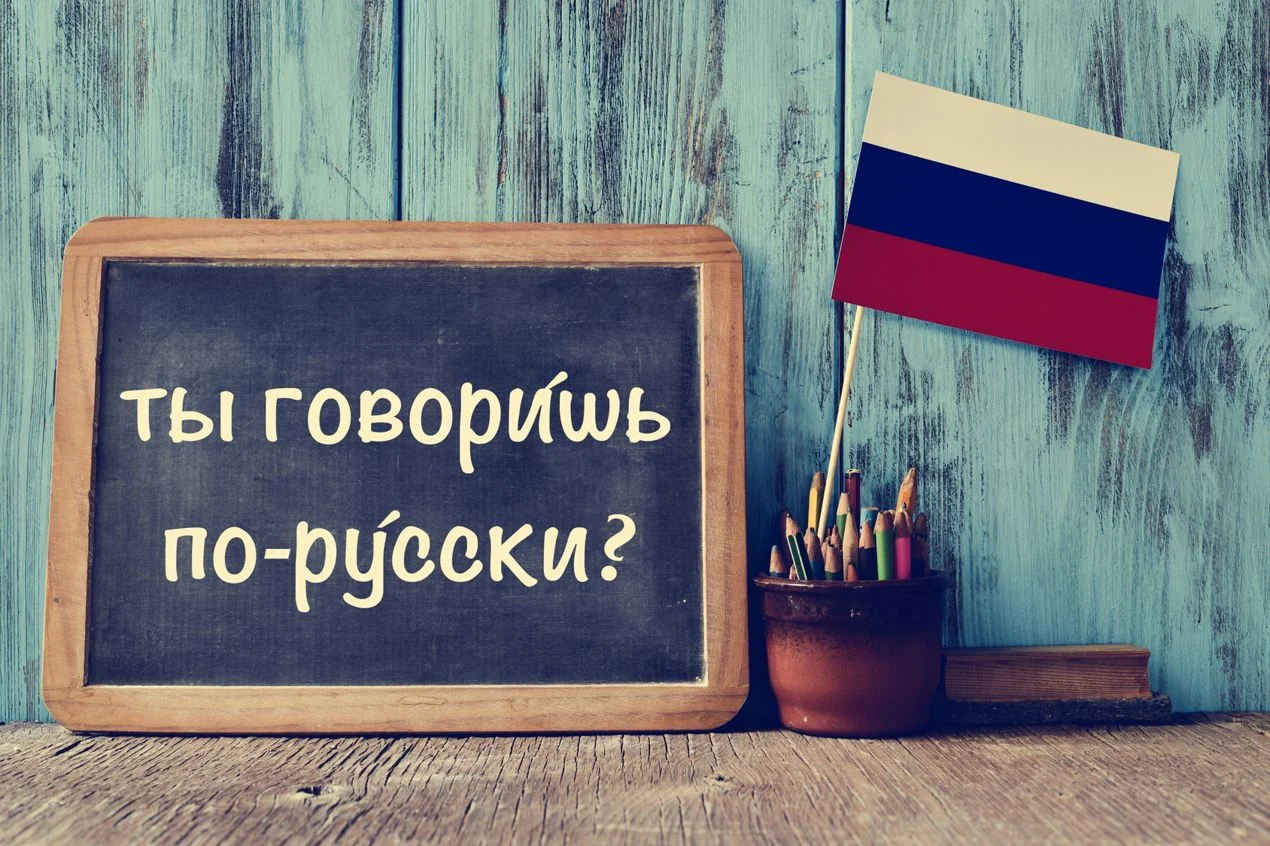
Walk through Yerevan and you’ll hear Russian within minutes, on the street, on TV, in shop signage. That surprises visitors who expect a small Caucasus nation to be linguistically sealed off. So, do Armenians speak Russian? Most of them, yes. But the story behind that is more interesting than the yes.
Is Russian an official language in Armenia?
No. The Constitution names Armenian (Hayeren, Հայերեն) as the sole official state language. Laws, courts, government paperwork and public schooling all run in Armenian. Russian has no official status. It sits in a practical middle zone instead: legally a foreign language, culturally everywhere.
Why do Armenians speak Russian?
One word: Soviets. Armenia was a Soviet republic from 1920 until independence in September 1991, and for those seven decades Russian was the language that ran the empire. It was compulsory in every school. University lectures, scientific publishing, military service and most career paths beyond the republic’s borders demanded it. An engineer from Gyumri who wanted a posting in Moscow or a physics degree in Leningrad had no choice in the matter.
So an entire population became bilingual. People educated before 1991 tend to speak Russian not as a school subject they half remember, but as a genuine second language they lived in.
The connection didn’t end with the USSR either. Russia remains Armenia’s largest trading partner, hundreds of thousands of Armenians work in Russia and send money home, and Russian-language TV and internet content still flows freely. All of that keeps the language earning its keep.
What percentage of Armenians speak Russian?
Surveys land in roughly the same zone: about seven in ten adults can hold a real conversation in Russian, and self-reported comprehension runs higher still. Among people over 45 fluency is close to universal. Among twenty-somethings it drops noticeably, which brings us to the generational split.
Do young Armenians still learn Russian?
They do, because they have to. Russian is a compulsory foreign language in Armenian public schools, typically from the early grades onward. Most young Armenians understand it comfortably through a childhood of school lessons, Russian dubs of movies, and the Russian-language internet.
Speaking it daily is another matter. Post-independence generations live their lives in Armenian, and when they reach for a second language by choice, it’s increasingly English. In Yerevan’s IT sector, which has boomed since the mid-2010s, English is often the more useful skill. Russian isn’t disappearing. It’s just sliding from “second native language” toward “strong foreign language,” one generation at a time.
Is Armenian related to Russian?
Not at all, and this catches people off guard. Armenian is its own independent branch of the Indo-European language family. It isn’t Slavic, and it isn’t close to Russian in grammar, sound or vocabulary beyond Soviet-era loanwords. It even has its own alphabet, 39 letters created by the monk Mesrop Mashtots in 405 AD, which Armenians have used for over 1,600 years.
A Russian speaker who hears Armenian for the first time understands nothing. The reverse is only different because Armenians learned Russian in school. If you’re curious how Armenian compares to its other big neighbor’s language, we’ve broken down whether Armenian is similar to Farsi too.
At home, in parliament, in classrooms and in daily life, Armenian is what the country speaks. Russian is the useful guest that never quite left.