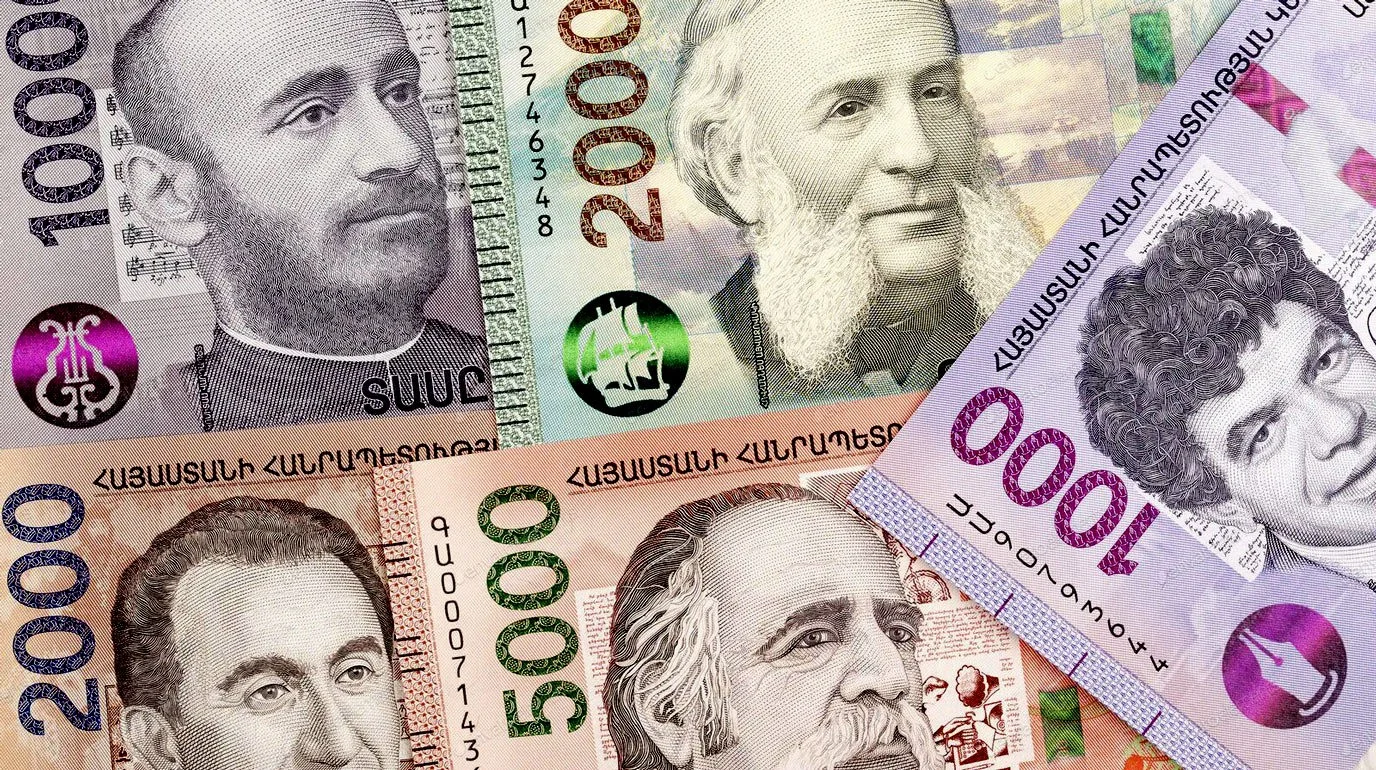
The currency of Armenia is the Armenian dram. Code AMD, symbol ֏, issued by the Central Bank of Armenia, and the country’s only legal tender since 1993. If you’re headed to Yerevan, forget bringing euros to spend directly. Armenia runs on drams, and you’ll be handed a stack of colorful banknotes within minutes of arriving.
When was the Armenian dram introduced?
On November 22, 1993. Armenia had declared independence from the collapsing Soviet Union in September 1991, but like most ex-Soviet republics it kept using the ruble while it set up its own institutions. Two years later the dram arrived, and the date is still marked as the currency’s official birthday.
Launching a currency during the blockade years of the early 1990s, with the Karabakh war ongoing and the economy in freefall, was a rough ride. Early inflation ate the smallest denominations, which is why the luma, the coin worth one hundredth of a dram, survives only on paper. Nominally every dram is 100 luma. Practically, no one has seen a luma coin in circulation in decades.
What does “dram” actually mean?
Money. That’s the literal translation of դրամ in Armenian, which makes “how much money?” a pleasingly circular question. The word goes back to the Greek drachma, and it isn’t a modern borrowing for effect: Armenian kingdoms minted silver coins called dram as far back as the Middle Ages. The 1993 currency picked up a name with centuries of local history behind it.
What is the symbol for the Armenian dram?
֏. Take Դ (da), the Armenian capital letter that starts the word “dram,” and cross it with two horizontal strokes, the same convention that gives the dollar and euro signs their bars. The symbol has its own slot in Unicode, so it renders on modern devices, though in daily life Armenians just as often write “դր.” or the code AMD.
What are the denominations of dram coins and banknotes?
Coins circulate in 10, 20, 50, 100, 200 and 500 drams. Banknotes come in 1,000, 2,000, 5,000, 10,000, 20,000 and 50,000 drams, plus a 100,000 dram note that exists mostly in bank vaults rather than wallets.
The banknotes double as a national portrait gallery. The current third series, introduced in 2018, features figures like the composer Komitas on the 10,000 and the painter Martiros Saryan, alongside writers, scientists and saints from Armenian history. For a traveler’s mental math: prices in Yerevan cafes mostly live in the 1,000 to 5,000 dram range, so the mid-size notes do the daily work.
Where can I check the dram exchange rate?
Rates float with the market. The Central Bank of Armenia publishes daily official rates at cba.am, every commercial bank and exchange office posts its own board, and the usual converters (XE, Google, your banking app) all track AMD against the dollar, euro and ruble. Exchange offices are everywhere in Yerevan and larger towns, and they typically beat airport rates comfortably.